
The Question Every Homeowner Asks First
You've been dreaming about a new kitchen for months — maybe years. You've browsed Pinterest boards, visited showrooms, and finally decided it's time. But before you commit, there's one question that stops almost every homeowner in their tracks: how long is this actually going to take?
It's a fair question. Your kitchen is the most-used room in your home. Losing access to it for weeks — or longer — affects your daily routine, your family's meals, and your sanity. Here in Pembroke Pines, where busy families juggle work, school, and everything in between, having a clear timeline isn't just nice to have. It's essential.
The truth is, kitchen remodel timelines vary based on the scope of work, the materials you choose, and how well the project is managed. But we can give you a realistic breakdown of what to expect at each phase so you can plan accordingly.
The Short Answer
For a typical full kitchen remodel — new cabinets, countertops, flooring, lighting, and appliances — most homeowners should plan for 8 to 12 weeks from demolition to final walkthrough. A smaller refresh that keeps the existing layout might take 4 to 6 weeks. A large-scale renovation that involves moving walls, plumbing, or electrical can stretch to 14 weeks or more.
Now let's look at what happens during each phase and where the time actually goes.
Phase 1: Design and Planning (2–4 Weeks)
This is the phase that happens before any hammer swings, and it's arguably the most important. During design and planning, you'll work with your contractor to finalize:
- The overall layout and floor plan
- Cabinet style, finish, and configuration
- Countertop material and edge profile
- Flooring selection
- Lighting, fixtures, and hardware
- Appliance specifications
Permits also get pulled during this phase. In Pembroke Pines, permit processing times can vary depending on the scope of work, so it's smart to get this started early. A good contractor handles the permit process for you so nothing falls through the cracks.
Pro tip: The faster you make material selections, the faster this phase goes. Indecision here is the number one cause of delays before construction even begins.
Phase 2: Demolition and Rough Work (1–2 Weeks)
Once permits are approved, demolition begins. Your old cabinets, countertops, flooring, and fixtures come out. If your remodel involves layout changes, this is also when walls get moved, new plumbing lines are roughed in, and electrical wiring is updated.
This phase tends to feel dramatic — your kitchen will look like a construction zone — but it moves quickly. Inspections for rough plumbing and electrical typically happen at the end of this stage before the project can move forward.
Phase 3: Installation (4–6 Weeks)
This is where your new kitchen starts to take shape, and it's the longest phase. Here's a general order of operations:
- Drywall and painting — Any new or repaired walls get finished first.
- Flooring installation — Whether it's tile, luxury vinyl plank, or hardwood, flooring typically goes in before cabinets.
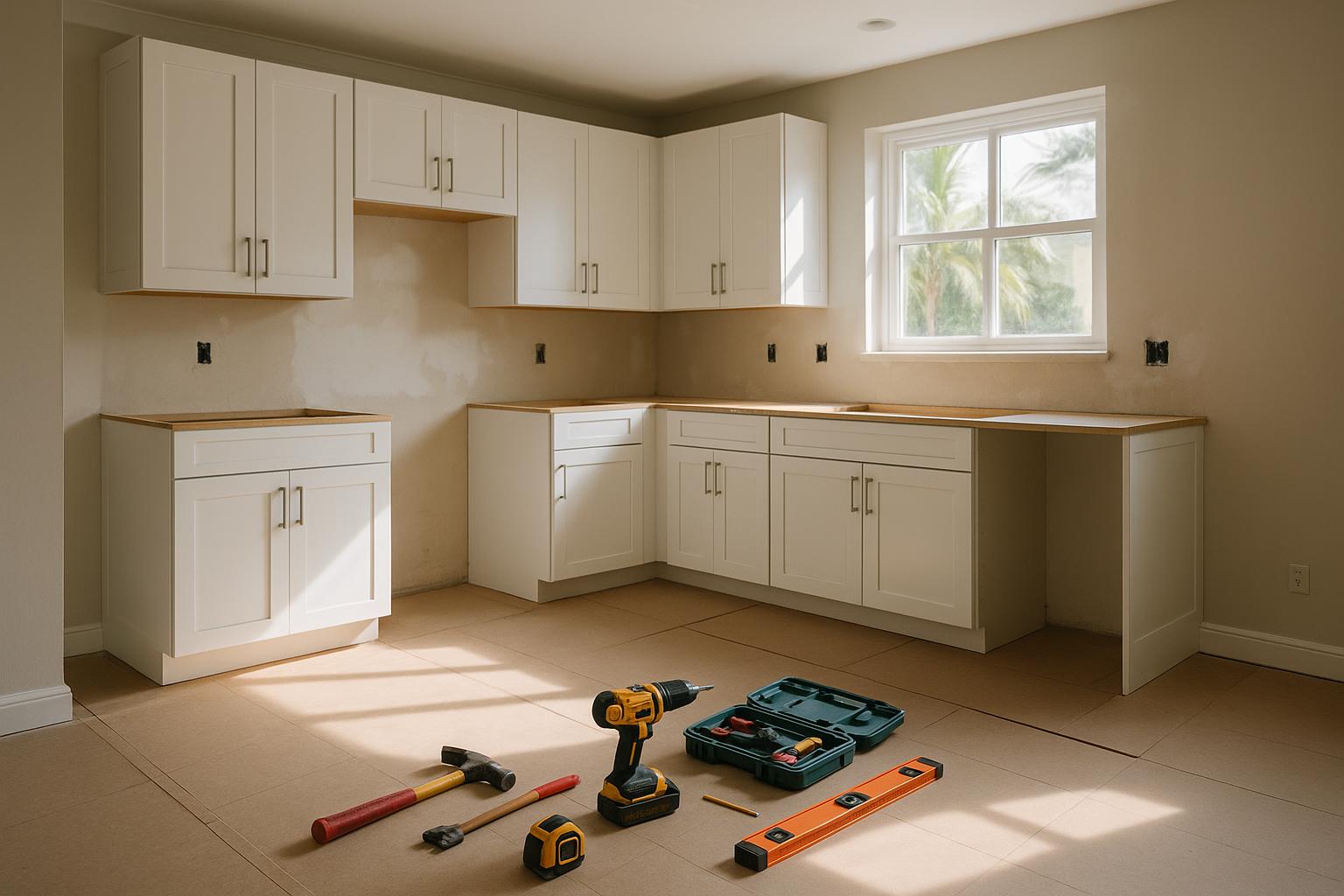
- Cabinet installation — This is a big milestone. Once cabinets are in, the kitchen suddenly looks like a kitchen again.
- Countertop templating and fabrication — After cabinets are set, a fabricator measures for your countertops. Fabrication usually takes 1 to 2 weeks depending on the material. Quartz and granite are the most popular choices we see among homeowners in Pembroke Pines and surrounding communities like Miramar and Cooper City.
- Countertop installation — Once fabricated, installation is typically completed in a single day.
- Backsplash, fixtures, and trim — The finishing touches go in last: backsplash tile, under-cabinet lighting, faucets, cabinet hardware, and trim work.
The countertop fabrication wait is the one gap in this phase that surprises most homeowners. It's not wasted time — other work continues around it — but it's worth knowing about upfront.
Phase 4: Final Details and Walkthrough (3–5 Days)
The last few days are dedicated to appliance installation, final plumbing and electrical connections, touch-up painting, caulking, and a thorough cleaning. Your contractor should walk through the entire project with you, checking every detail against the original plan and addressing any punch-list items on the spot.
What Causes Delays?
Even the best-planned projects can hit bumps. Here are the most common causes of kitchen remodel delays:
- Material backorders — Supply chain issues have improved, but certain specialty tiles, imported fixtures, or custom cabinet finishes can still have long lead times. Ordering early is critical.
- Permit and inspection scheduling — Municipal schedules are outside your contractor's control, but an experienced local contractor knows how to navigate the process efficiently.
- Hidden problems — Older homes sometimes reveal surprises behind walls: outdated wiring, water damage, or plumbing that doesn't meet current code. A reputable contractor will communicate these findings immediately and present solutions rather than just adding time and cost without explanation.
- Change orders — Changing your mind about materials or layout mid-project is the single biggest controllable cause of delays. It's completely normal to have second thoughts, but each change can add days or weeks.
How to Keep Your Remodel on Schedule
Homeowners have more control over the timeline than they might think. Here are practical steps you can take:
- Finalize all selections before demolition day. Cabinets, countertops, tile, fixtures, hardware — all of it. This eliminates waiting on materials during construction.
- Respond quickly to your contractor's questions. Small decisions that sit unanswered for days add up fast.
- Set up a temporary kitchen. A coffee maker, microwave, and small fridge in another room will make the process much more livable. Many Pembroke Pines families we work with set up in their garage or dining area and find it's far less disruptive than they expected.
- Choose a contractor who communicates proactively. Weekly updates, a clear schedule, and honest conversations about any issues — these are signs of a well-managed project.
Why Contractor Selection Matters More Than You Think
The biggest variable in your kitchen remodel timeline isn't the size of the project or the materials you choose. It's who manages the work. A contractor who coordinates trades efficiently, orders materials with proper lead times, and schedules inspections proactively can save you weeks compared to one who's juggling too many projects or figuring things out as they go.
At Cottonwood Building Contractors, we manage every phase of the remodel from initial design through final walkthrough. We've built our process around keeping Pembroke Pines homeowners informed and on schedule because we know your time matters just as much as the finished result.
Ready to Start Planning?
If you're considering a kitchen remodel, the best time to start the conversation is before you're ready to start construction. Early planning gives you time to make thoughtful material selections, secure permits, and lock in a start date that works for your family. Reach out to our team to talk through your project — we're happy to walk you through what a realistic timeline looks like for your specific kitchen.